
Some books confirm what we already believe. Others force us to rethink the foundations.
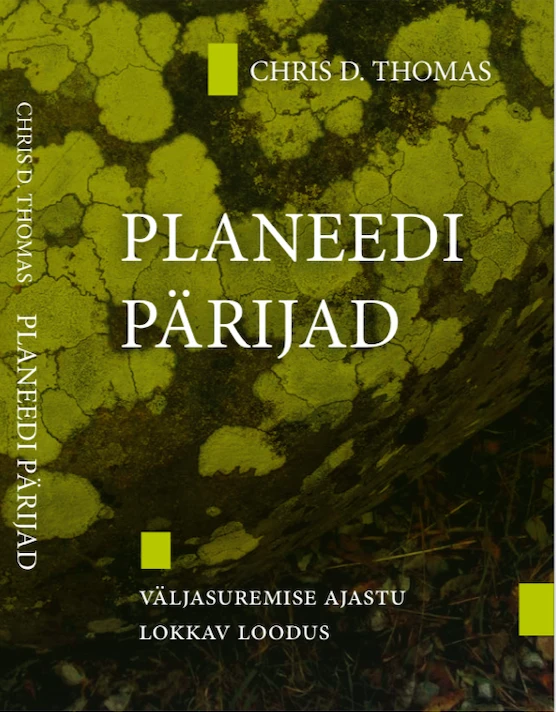
Inheritors of the Earth: How Nature Is Thriving in an Age of Extinction by Chris D. Thomas belongs to the second category. Named one of the best books of 2017 by publications such as The Times, The Economist and The Guardian, it challenges how we think about biodiversity, conservation and, importantly, land management.
For us in Estonia, this is not abstract theory. It connects directly to how we manage forests, farmland, and private land in a changing climate.
Nature Is Changing: With or Without Us
Thomas does not deny extinction or climate change. He is clear: human-driven climate change must be reduced.
But he also points out something we talk about less. Alongside losses, many species are adapting, expanding, mixing, and forming new ecological communities. Life persists because it changes.
This perspective matters when we discuss sustainable land management.
If ecosystems are dynamic, then managing land sustainably cannot mean freezing it in a single historical state. Forests in a warming hemiboreal climate will not look identical to those of the 19th century. Species ranges are shifting. Some newcomers will thrive. Some familiar species may retreat.
The question is not whether change will happen. The question is how we respond to it.
Are We Managing for the Past, or the Future?
Thomas writes that we often treat nature like a priceless painting that must be preserved exactly as it is. If it seems damaged, we attempt to restore it to an earlier version.
In land-use policy, this mindset can translate into rigid baselines: restore this habitat to how it looked in a specific year; remove species that “do not belong”; prioritize historical composition over ecological function.
But what if a forest that looks different still binds carbon effectively, supports biodiversity, and remains economically viable for landowners?
Sustainable land management, especially on private land, is not about creating outdoor museums. It is about balancing:
- biodiversity,
- climate resilience,
- economic use,
- and intergenerational responsibility.
That balance requires flexibility.
The Landowner’s Role in a Dynamic Landscape
In our discussions about voluntary conservation and long-term stewardship, one point keeps returning: most landowners think in generations.
They want their children to inherit healthy land. That instinct aligns with sustainability.
Thomas’s argument strengthens this perspective. If ecological communities are constantly reshuffling, then sustainable management is not about resisting every shift. It is about:
- maintaining ecological function,
- increasing resilience,
- and ensuring that land continues to support both wildlife and people.
This aligns closely with the idea that conservation should work with landowners, not against them. Incentives, cooperation, and trust-based agreements (including pilot ideas like regulatory certainty in exchange for habitat restoration) make more sense in a world where ecosystems are fluid.
Punitive, static models fit poorly with dynamic nature.
From Defensive Conservation to Forward-Looking Stewardship
One of Thomas’s most useful contributions is a simple mental shift.
Instead of asking, “How do we prevent this change?” we might ask:
- Will resisting this change make sense in 200 years?
- Would future generations see this shift as a tragedy, or simply as normal?
- If change is inevitable, how do we guide it in a direction that benefits both biodiversity and society?
This is directly relevant to boreal region land management debates.
Climate adaptation in forestry. Mixed-species stands. Assisted migration. Allowing certain non-native but non-invasive species to establish. Designing landscapes that are more diverse than they were historically.
These ideas can feel uncomfortable because they depart from a fixed image of “natural.” But sustainability is not about nostalgia. It is about durability.
Increasing Biodiversity Doesn’t Mean only Slowing Loss
Thomas also makes a provocative point: increasing biodiversity is as legitimate a goal as slowing its decline.
For land management, this opens new possibilities.
Instead of focusing solely on protecting what remains, we can also think about:
- creating new habitats,
- restoring degraded areas in ways suited to future climates,
- diversifying forest structure and species composition,
- encouraging ecological innovation rather than suppressing it.
This does not mean abandoning protection of threatened species. It means expanding the toolbox.
Sustainable Land Management in an Age of Change
The central message of Inheritors of the Earth is not complacency. It is realism.
We cannot choose a future without ecological change. We can only influence its direction and pace.
For Estonia, Poland, Belgium ans Spain (WESEM project countries) and for any country balancing biodiversity goals, climate commitments, and private land rights, this perspective is invaluable.
Sustainable land management is not about holding the line against time. It is about shaping change responsibly:
- reducing harmful impacts,
- maintaining ecosystem services,
- empowering landowners as partners,
- and building landscapes that remain livable for both people and wildlife.
If life on Earth survives because it changes, then our policies must be capable of change too.
That may be the most important lesson this book offers us.


